
Stop Water From Taking Over Your Yard
The problem is poor yard drainage that is being experienced by many homeowners in the U.S., particularly in areas such as Westminster. When water lingers around, it can destroy landscaping, serve as a source of mosquitoes, and then it can even compromise the foundation of your house.
It is there that the correct yard drain system will count. Rooter Man Plumbing of Orange County can assist homeowners with installing and maintaining proper drainage systems to ensure the health of lawns and the safety of homes because we have reputable plumbers in Westminster who keep the lawns healthy and homes safe.
When you are tired of puddles or wet grass, you should learn how the various kinds of drains function so that you can know the best solution. Let us discuss the 7 most popular yard drains and the way each of them works.
1. French Drains—A Classic Solution for Soggy Yards
How It Works
A French drain is a gravel-filled trench containing a perforated pipe that redirects water away from your home. As rainwater seeps through the soil, it flows into the trench and down the pipe, dispersing safely away from your property.
Why It’s Effective
Ideal for lawns with consistent pooling
Prevents foundation and basement flooding
Easy to conceal under turf or gravel
Pro Tip: Line the trench with landscape fabric before adding gravel to prevent clogging from soil.
Fact: According to the American Society of Home Inspectors, nearly 60% of U.S. homes experience below-ground moisture issues. French drains are one of the simplest and most reliable solutions.
2. Catch Basin Drains – Great for Surface Water
How It Works
Catch basins are installed at low points in your yard. They collect surface water through a grated cover and direct it through underground pipes to a storm drain or dry well.
Best Uses
Driveways or patios that collect rainwater
Low-lying areas that flood quickly
Homes with heavy runoff from roof gutters
Catch basins trap debris and prevent clogs, keeping your system clear and efficient.
Maintenance Tip: Clean the grate regularly—especially after storms—to avoid blockages.
3. Channel Drains—Perfect for Driveways and Walkways
How It Works
Also known as trench drains, these are long, narrow drains with a grated top. They’re installed flush with surfaces like driveways, patios, or pool decks to capture flowing water quickly.
Advantages
Great for preventing driveway flooding
Durable and long-lasting
Can handle large volumes of water quickly
Example: If your driveway slopes toward your garage, a channel drain can prevent water from seeping under the door.
Are you tired of a swampy yard? A Yard Drain Might Be the Fix You Need. Then you must check this about how drainage systems can save your yard.
4. Dry Wells – Natural Water Absorption
How It Works
A dry well collects and holds excess water underground, allowing it to slowly seep into the surrounding soil. It’s typically connected to downspouts or other drains.
Best For
Large yards or gardens
Areas with poor surface drainage
Preventing stormwater runoff
Eco Benefit: Dry wells help recharge groundwater naturally, reducing strain on public stormwater systems.
Fact: A properly designed dry well can absorb up to 50 gallons of water per cubic foot of gravel, making it ideal for eco-conscious homeowners.
5. Pop-Up Emitters—Simple Yet Smart
How It Works
Pop-up emitters are connected to underground drain pipes. When water pressure builds, the cap “pops up” to release water away from your yard or foundation, then closes when the flow stops.
Why Homeowners Love Them
Low-cost solution
Blends into landscaping
Helps redirect gutter or French drain discharge
Pro Tip: Install emitters at least 10 feet away from your foundation for best results.
6. Grassy Swales—The Natural Drainage Option
How It Works
A swale is a shallow, sloped depression that channels rainwater toward a drainage outlet. Instead of pipes, it uses gravity and vegetation to control water flow naturally.
Benefits
Adds a landscaping feature
Filters pollutants naturally
Reduces soil erosion
Eco Insight: The Environmental Protection Agency notes that vegetated swales can remove up to 80% of suspended solids from runoff water.
7. Sump Pumps for Yards—The Last Line of Defense
How It Works
While sump pumps are more common indoors, outdoor versions can be installed in basins at the lowest yard points. They automatically pump water out when it collects too fast for natural drainage.
Best For
Yards with severe flooding
Clay-heavy soils
Properties below street level
Maintenance Tip: Test your pump every season to ensure it activates automatically when water levels rise.
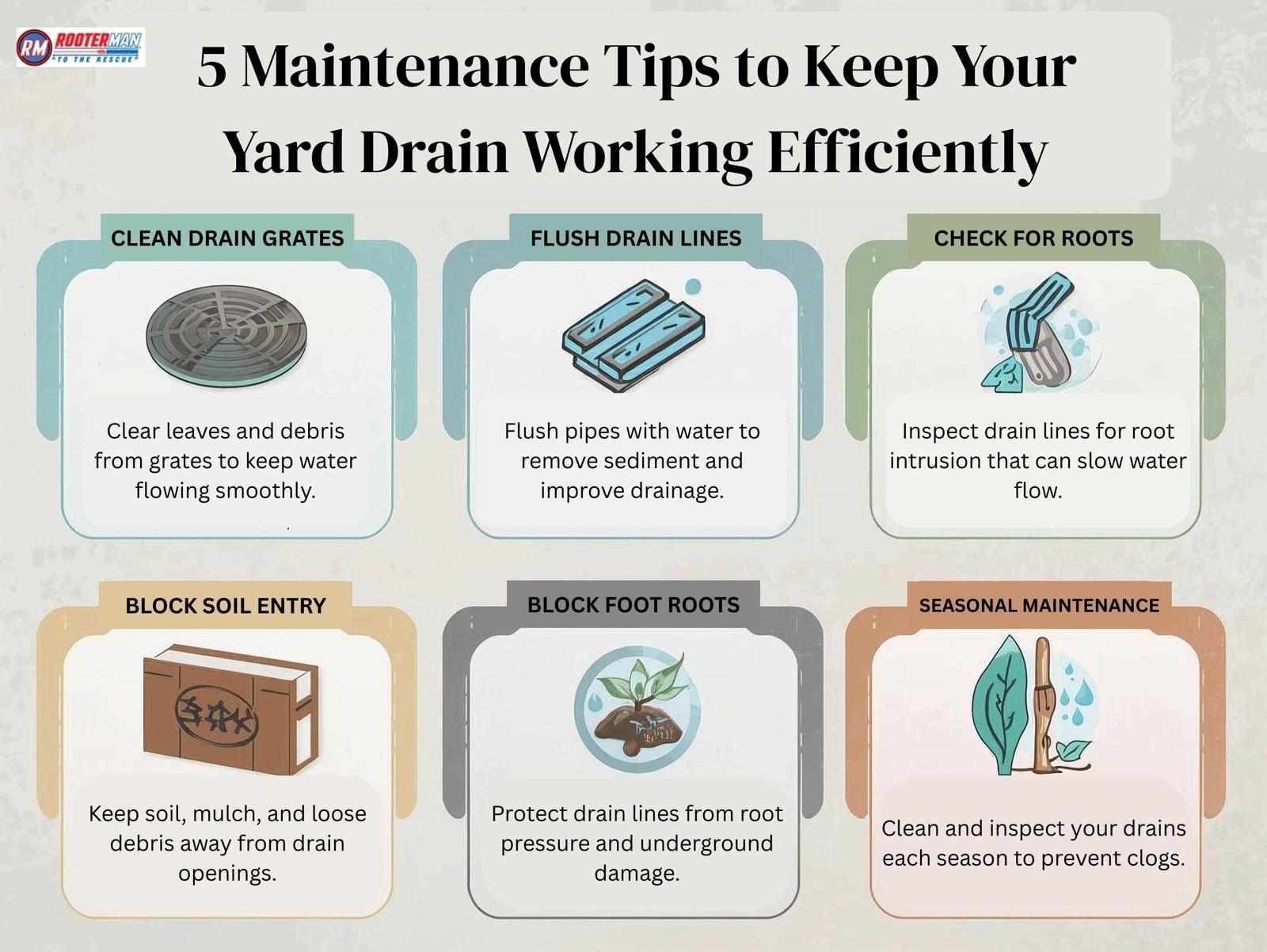
Pro Tips for Maintaining Your Yard Drain System
Inspect drain covers and grates monthly.
Flush underground pipes annually.
Remove leaves and debris after every storm.
Regrade soil around the home if pooling continues.
Add a gravel barrier to prevent erosion around outlets.
Stat to Note: The National Flood Insurance Program reports that just one inch of standing water can cause over $25,000 in damage to an average home.
That’s why investing in proper drainage isn’t just about looks—it’s about protecting your property value and peace of mind.
Need Expert Help with Yard Drainage?
If you’re unsure which system fits your yard, don’t guess—get professional advice. At Rooter Man Plumbing of Orange County, our licensed plumber in Westminster specializes in yard drainage installation, maintenance, and repair. Whether you’re dealing with standing water, slow runoff, or foundation leaks, our experts can inspect your property and recommend the perfect fix.
Final Thoughts
Yard drainage may not sound very exciting, but it is one of the cleverest home improvements you can achieve. From French drains to sump pumps, the system of each is its own special mechanism for keeping the water where it belongs—away from your house.
Such drains, when designed and installed properly, can save your landscape, avoid expensive water damage, and ensure that your outdoor areas are beautiful throughout the year.



Write a comment ...