
So, real talk for a second.
When was the last time you heard "sewer repair" and thought, "Oh great, no problem at all"?
Yeah. Never.
Because for most of us, those two words mean one thing: a destroyed yard, a massive bill, and weeks of chaos outside our front door.
But here's the thing nobody tells you upfront:
It doesn't have to be that way anymore.
Sewer repair has changed — a lot. And if you're a homeowner in Huntington Beach or anywhere in Orange County dealing with slow drains, weird smells, or backed-up toilets… there's a much better way to handle it now.
A reliable plumber in Huntington Beach today can fix your sewer line with barely any digging at all. No torn-up lawn. No cracked driveway. No weeks of looking like a construction zone.
Let's talk about how.
First, Why Did Old Sewer Repair Feel So Brutal?
Think about what traditional repair actually looked like.
Workers showed up with heavy equipment. They dug long trenches—sometimes across the entire yard, sometimes through the driveway, sometimes right up against the house.
The landscaping you spent years growing? Gone.
The concrete path you just had redone? Cracked open.
And after all that? You still had to wait days — sometimes weeks — for everything to be patched back up.
So, What Exactly Is Trenchless Repair?
Think of it this way.
Instead of opening up the entire pipe from above, plumbers now work through the pipe. They use small access points — usually just one or two small holes — and send tools, cameras, and materials right through the existing line.
The pipe gets fixed. The yard stays intact.
Sounds almost too simple, right? But the technology behind it is seriously impressive. Let's walk through the five methods actually being used right now.
Method 1 — Pipe Lining (The One That Creates a Pipe Inside a Pipe)
This is the most popular trenchless method out there today.
Here's what happens, step by step:
A flexible liner soaked in resin gets slid into the damaged pipe
It's inflated so it presses snugly against the pipe walls
The resin hardens—basically forming a brand-new pipe inside the old one
The access point gets sealed. Job done.
The new inner pipe can last over 50 years, according to the Water Research Foundation.
And it works on almost every pipe material—clay, cast iron, PVC, and concrete. Most older homes qualify.
Quick tip: If the plumber recommends replacement before even looking inside the pipe, ask for a camera inspection first. A good team checks before they cut.
Method 2 — Pipe Bursting (When the Old Pipe Is Too Far Gone)
Sometimes the pipe isn't just cracked. It's collapsed. It's done.
Pipe lining won't work on that. But pipe bursting will.
Here's the process:
A bursting head gets threaded through the old, damaged pipe
As it moves through, it breaks the old pipe apart—pushing the pieces into the surrounding soil
A brand-new pipe gets pulled in right behind it
What's really cool? Plumbers can actually upsize the pipe during this process. A bigger pipe means better flow. That's a win on top of a win.
Cost-wise, Trenchless Technology Magazine reports that pipe bursting saves homeowners 30–40% compared to traditional dig-and-replace jobs.
Still only needs 1–2 access holes. Still no trench.
Method 3 — Hydro Jetting (The Power Wash for Your Pipes)
Okay, quick question — how long has your home's sewer line been running without any cleaning?
Five years? Ten? More?
Because grease, roots, mineral buildup, and general gunk don't just disappear on their own. They pile up. And eventually, they cause a serious blockage.
Here's a real example:
A family in Huntington Beach kept dealing with slow drains, no matter what they tried. Snaking didn't fix it. Chemical drain cleaners didn't fix it. One hydro jetting session cleared out decades of buildup in about two hours. Full flow restored. No digging. No damage.
Actionable tip: Schedule hydro jetting every 1–2 years as routine maintenance. It costs far less than an emergency repair call at midnight.
Method 4 — Spray Lining (Small Pipes, Targeted Fix)
This one's a little more specialized—but really effective for the right situation.
Instead of inserting a liner, plumbers spray an epoxy coating directly onto the inside of the pipe. It fills in pinholes, hairline cracks, and early corrosion spots. Then it hardens into a smooth, sealed surface.
Best for:
Pipes under 6 inches in diameter
Localized damage — not widespread problems
Cast iron and galvanized steel are showing early signs of wear
Here's why this matters more than people realize:
Catching corrosion early — before a full break happens — is where spray lining earns its value.
Method 5 — Robotic Pipe Cutting (Yes, It's as Cool as It Sounds)
Have big trees near the sewer line? Then this one's especially worth knowing about.
Tree roots are sneaky. They find the tiniest cracks in a pipe and grow right in. Over time, they take over the whole line.
Robotic pipe cutting sends a small, camera-guided robotic cutter inside the pipe to remove those roots with precision. No chemicals. No guessing. Just clean, targeted removal of exactly what's causing the problem.
It's often paired with pipelining afterward—so the newly cleared pipe gets sealed and protected at the same time.
Pro tip: If there are mature trees within 10–15 feet of a sewer line, get a camera inspection every 2–3 years. Root intrusion is the #1 cause of residential sewer problems in older California neighborhoods — and catching it early saves thousands.
Which Method Is Right for the Situation?
Here's a simple way to think about it:
What's happening
Best method to use
Cracks or corrosion throughout
Pipe Lining (CIPP)
Collapsed or severely damaged
Pipe Bursting
Heavy blockage or root buildup
Hydro Jetting
Early corrosion, smaller pipe
Spray Lining
Roots growing inside the pipe
Robotic Pipe Cutting
And honestly? The only real way to know which one fits is a video camera inspection. No guessing. No assumptions. Just look inside and see what's actually going on.
Here's Where Rooter Man Plumbing of Orange County Comes In
This is where we'd say, "Don't just call any plumber."
Call one who actually uses these methods. Because not every company has the equipment or the training for trenchless work.
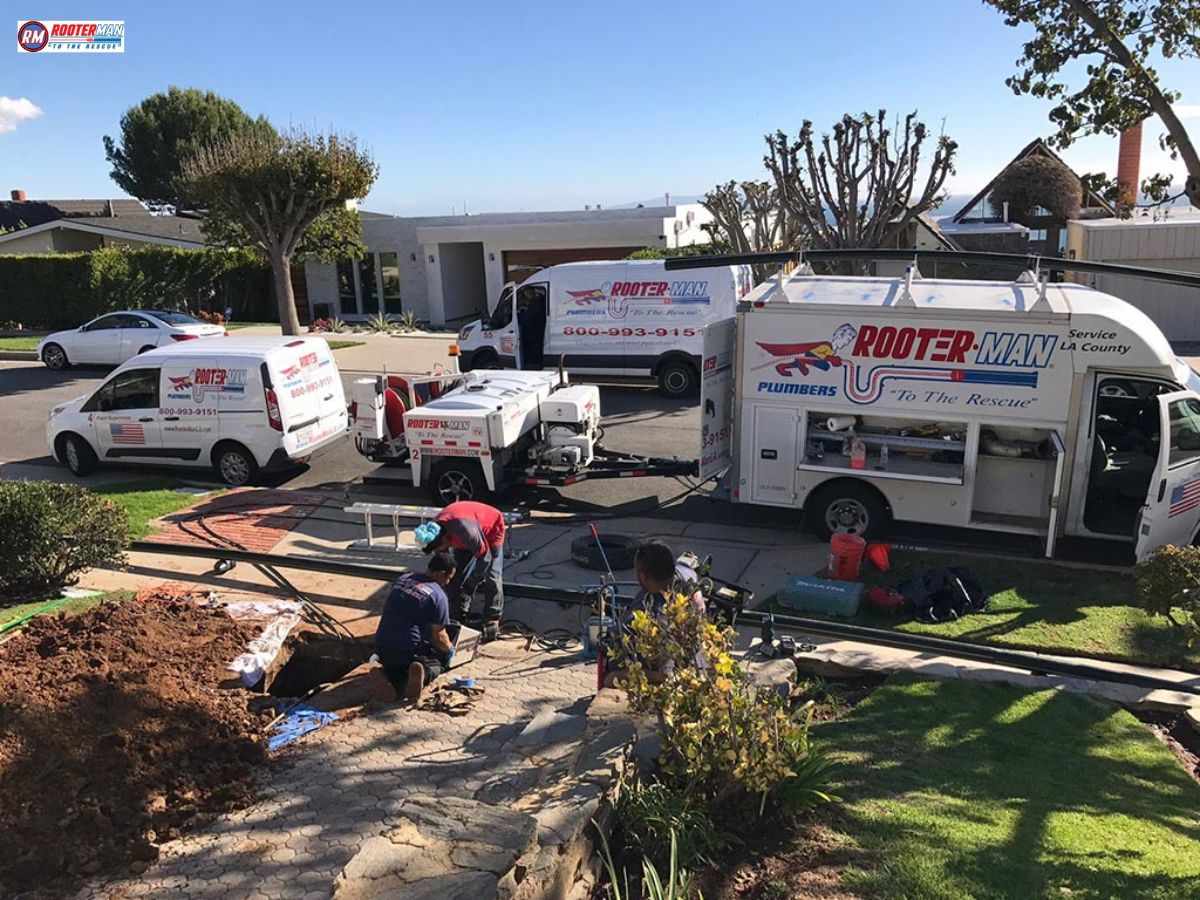
Rooter Man Plumbing of Orange County has been serving Huntington Beach homeowners for years. Here's what they bring to the table:
Free camera inspections—so there are no surprises
Upfront pricing before any work begins
Same-day service when it's urgent
Full trenchless repair capabilities
Licensed, insured, and deeply familiar with Orange County homes
Don't let a small sewer issue sit until it becomes a big expensive one.
Signs That Something's Already Wrong
Does any of this sound familiar?
Multiple drains in the home are slow, not just one
There's a gurgling sound after flushing the toilet
The yard has a wet patch that wasn't there before
There's a faint sewage smell inside or outside the house
Water backs up into the bathtub when the toilet flushes
One of those? Worth a call.
Two or more? Don't wait.
Wrapping This Up
Here's the honest truth about modern sewer repair.
It's faster. It's cleaner. It's less stressful. And in most cases, it costs less than the old trench-and-dig approach did.
The biggest thing standing between a homeowner and a smooth repair is usually just not knowing these options exist.
Now that side of things is covered.
And if there's still a question about whether a full replacement is even necessary—or if a repair is enough—this breakdown is worth a read before making any decisions: Sewer Line Repair vs Replacement
FAQs — The Questions People Actually Ask
Is trenchless repair as strong as traditional repair?
Stronger, in most cases. The seamless lining resists roots and cracks better than most original pipe materials.
How long does it take?
Most trenchless jobs wrap up in 4–8 hours. Traditional digging can stretch to 3–5 days.
Will it work on old clay pipes?
Yes. Clay, cast iron, concrete, PVC — all compatible with most trenchless methods.
Can we stay home during the repair?
In almost every case, yes. Trenchless work is minimally invasive and rarely disrupts daily life inside the house.
How do we find a trustworthy plumber in Huntington Beach for this?
Look for someone licensed, trenchless-capable, and honest about pricing upfront. Rooter Man Plumbing of Orange County is a solid place to start.


Write a comment ...