
A yard drain that stops working can turn a clean outdoor space into a muddy mess fast. Many homeowners deal with pooling water, soggy soil, bad smells, and even damage to their home’s foundation. If you’re searching for ways to fix slow drainage, reduce flooding, or protect your property, you’re in the right place.
As a trusted plumber in Garden Grove, Rooter Man Plumbing of Orange County knows how frustrating yard drainage problems can be. This guide shares simple maintenance tips that keep your yard drain flowing smoothly all year long—so you avoid stress, repairs, and yard damage.
Why Should You Maintain Your Yard Drain Regularly?
A yard drain works like a safety system. It moves rainwater away from your property to prevent flooding.
But when dirt, leaves, or roots block the system, water backs up.
What Happens When You Don’t Maintain It?
Water pooling for hours or days
Grass is dying because of standing water
Mosquitoes breed in wet areas
Damage to concrete, patios, and foundations
Mold near the home’s exterior walls
Regular yard drain maintenance prevents expensive repairs.
Tip #1 – Clean Your Drain Grates Often
Grates collect leaves, soil, and debris. When clogged, water cannot enter the drain.
Step-by-Step Cleaning Guide
Remove the grate gently.
Pull out leaves and packed dirt.
Rinse the grate with a hose.
Clear debris around the opening.
Replace the grate tightly.
Why This Matters
Prevents total blockage
Reduces pressure on drain lines
Supports smooth water movement
This simple task takes 5–10 minutes and prevents major issues during heavy rain.
Tip #2 – Flush the Drain Lines to Remove Sediment
Sediment builds up inside the pipe over time. It slows the water flow and causes backups.
How to Flush Your Yard Drain
You can flush the line using a garden hose:
Insert the hose into the drain line.
Turn the water on full pressure.
Let it run for 3–5 minutes.
Watch for dirt and small debris exiting the other end.
Real Example
Many homeowners in rainy areas notice drains backing up after storms. A simple flush often restores flow immediately, especially if the blockage is small.
Tip #3 – Check for Root Intrusion in Your Pipes
Tree roots are one of the biggest threats to outdoor drain lines.
Why Roots Enter Pipes
Roots chase moisture.
When they find small cracks or weak joints, they grow inside.
Signs of Root Problems
Water draining slowly
Gurgling noises
Muddy areas over the drain line
Repeated blockages
Stat to Support
The Environmental Protection Agency reports that root intrusion causes up to 50% of outdoor pipe blockages in older properties.
What to Do
If you suspect roots, call a professional for:
Camera inspection
Root cutting
Pipe repair (if needed)
Tip #4 – Prevent Soil and Mulch from Entering the Drain
Many homeowners use mulch or loose soil for landscaping. During rain, this material can wash into the drain and create blockages.
Simple Prevention Steps
Use these to reduce buildup:
Build a small border around mulch beds
Avoid piling soil near the drain grate
Use heavier mulch options like rubber mulch
Slope the soil slightly away from the drain
These steps keep dirt out and protect the system.
Tip #5 – Follow Seasonal Yard Drain Maintenance
Seasons change how much water your drain handles.
Preparing ahead prevents surprise problems.
Spring
Clear leaves and sticks
Check for winter damage
Flush the lines
Summer
Remove grass clippings
Inspect the soil level around the drain
Watch for slow-draining areas
Fall
Clean grates weekly
Clear gutters to avoid overflow
Remove heavy leaf buildup
Winter
Make sure the drain opening stays clear
Remove ice around the grate
Watch for puddles after rainfall
Seasonal care protects your yard year-round.
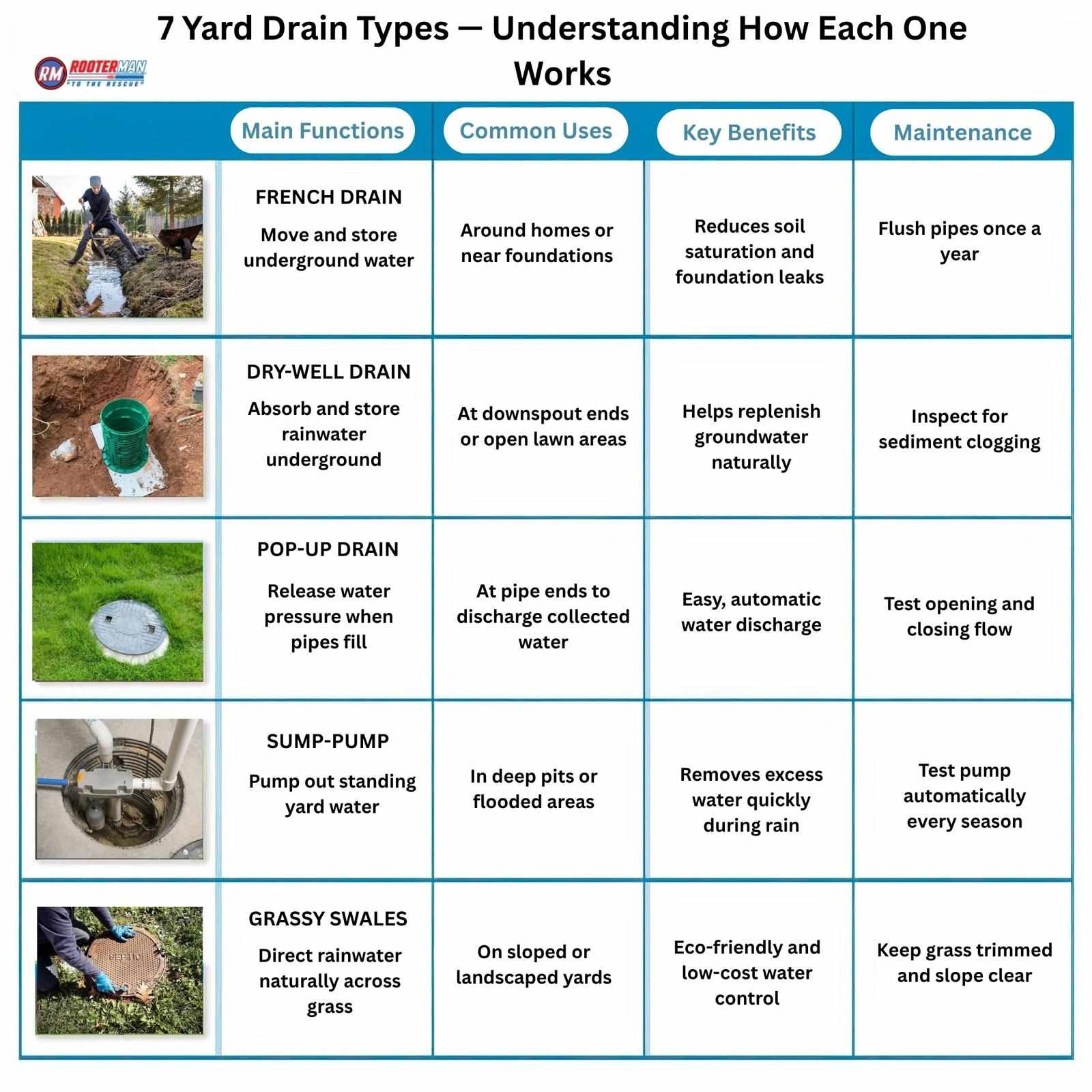
If you want to understand why yard drains are so useful, check this helpful guide on swampy yard fixes.
How to Know When Your Yard Drain Needs Professional Help
Sometimes the problem is deeper than surface cleanup.
Signs You Need a Plumber
The drain doesn’t clear after flushing
Water sits for more than 24 hours
Bad smells near the drain
Standing water reaches your patio or foundation
Repeated blockages even after cleaning
A professional plumber has tools for deep cleaning, camera inspections, and root removal.
Need Reliable Yard Drain Service?
If you’re dealing with slow drainage or repeated yard flooding, help is nearby.
Rooter Man Plumbing of Orange County provides expert yard drain cleaning, inspections, repairs, and maintenance. When you need a dependable plumber in Garden Grove, our team responds fast with reliable solutions.
We use advanced tools to clear clogs, eliminate roots, and protect your property from water damage.
Frequently Asked Questions (FAQs)
1. How often should I clean my yard drain?
Clean the grate monthly, especially in the fall or after storms.
2. Why does my yard drain clog so often?
Common causes include leaves, soil, roots, and a poor slope around the drain.
3. Can I flush the drain myself?
Yes, if the clog is small. Use a garden hose to push sediment out.
4. Do tree roots always require a plumber?
Yes. Roots grow deep and need specialized cutting tools.
5. What happens if I ignore a slow drain?
Flooding, foundation cracks, dead grass, and mold growth can occur.


Write a comment ...